Tracking the information about your manuscript
Communicate with the editorial office
Query manuscript payment status Editor LoginCollecting, editing, reviewing and other affairs offices
Managing manuscripts
Managing author information and external review Expert Information Reviewer LoginOnline Review
Online Communication with the Editorial Department
Page Views
Page visits today: 139
Source-Pathway-Receptor Control and Low-Carbon Remediation of Heavy-Metal Groundwater Pollution in Historical Legacy Non-Ferrous Metal Mines: Process Mechanisms, Technical Boundaries and Management Pathways
Fan Shukai;Lin Xingjie;Miao Yu;Wu Yingjian;Zhang Juan;BGRIMM Technology Group;Groundwater contamination by heavy metals and metalloids in historical legacy non-ferrous metal mining areas is typically governed by the coupled effects of persistent source release, preferential migration through heterogeneous media, and cumulative exposure at receptor zones. It represents a long-term, complex, and operation-and maintenance-constrained challenge at the interface of mine-site ecological restoration and groundwater contamination control. Unlike active mining sites with relatively complete engineering management systems,historical legacy mining areas are often characterized by incomplete historical records, inadequate closure measures, weak long-term stewardship, and substantial uncertainty in source distribution and hydrogeological conditions.Waste-rock piles, tailings impoundments, abandoned adits, mined-out areas, and disturbed aquifers may continue to generate acidic drainage and release associated contaminants after mine closure, thereby sustaining groundwater contamination over extended periods. Based on advances in environmental hydrogeology, acid mine drainage,mine-site ecological restoration, and green and sustainable remediation, and with reference to relevant Chinese standards and policies for groundwater contamination control and ecological restoration of mining areas, this review develops a source–pathway–receptor analytical framework to examine the formation, migration, transformation,risk transfer, and remediation response of groundwater contamination in legacy non-ferrous metal mining areas.The review indicates that long-term groundwater risk in mining areas is not determined solely by contaminant concentrations measured in individual monitoring wells. Rather, it is jointly controlled by sulfide mineral oxidation and acidification, fracture-controlled preferential flow and matrix diffusion, iron-sulfur cycling, dissolution and transformation of secondary minerals and subsequent metal remobilization, and receptor-chain transfer processes linking groundwater, surface water, and farmland systems. These processes enhance the persistence, mobility, and spatial heterogeneity of contamination and may lead to delayed release, plume tailing, concentration rebound, and risk accumulation at downstream receptors. Conventional remediation technologies, including pump-and-treat systems, physical containment, permeable reactive barriers, nanomaterial-based remediation, and passive treatment or nature-based remediation, have distinct technical functions and applicability boundaries. However, when applied as stand-alone measures, they are often insufficient to simultaneously achieve sustained risk reduction, low-carbon operation, and reliable long-term maintenance under conditions of strong source loading, complex hydrogeological structures, non-steady-state hydrogeochemical evolution, and sensitive receptors. Groundwater remediation in historical legacy mining areas should therefore shift from short-term compliance based on concentrations in individual wells toward an integrated strategy oriented to contaminant mass-flux reduction at critical control transects and acceptable receptor risk. Supported by hydrogeological baseline diagnosis and implemented through coordinated source reduction, pathway interception, receptor-zone protection, dynamic monitoring, and value-realization feedback mechanisms, the proposed framework integrates risk control, carbon-emission constraints, and long-term stewardship, providing a low-carbon and collaborative governance pathway for measurable, adjustable,and accountable long-term groundwater risk management in legacy non-ferrous metal mining areas.
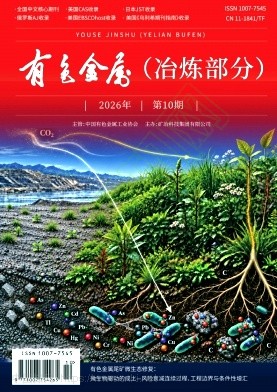
Microecological Restoration of Non-ferrous Metal Tailings: Microbe-Driven Pedogenesis-Risk Attenuation Continuum, Engineering Boundaries, and Conditional Carbon Gains
Li Rui;Miao Yu;Zhang Chi;Tan Haiwei;Li Fangze;Zhang Ge;Sun Qiwei;Hua Tianci;Pang Zhikun;Xin Xin;Yang Shengyi;Lin Xingjie;BGRIMM Technology Group;Non-ferrous metal tailings are characterized by high risks of heavy metal exposure, extremely poor substrate fertility, unstable physical structure, and the absence of self-sustaining ecological processes. Therefore, their remediation cannot be understood merely as the stabilization or immobilization of contaminants. A more essential challenge lies in reconstructing substrate functions that can support vegetation establishment, nutrient cycling, microbial succession, and long-term profile development. Although increasing attention has been paid to microbial remediation of mine tailings, existing reviews have generally focused on functional microbial groups, specific remediation technologies, or isolated mechanisms. Relatively limited effort has been made to integrate tailings type, vertical profile position, remediation stage transition, and engineering-scale boundary conditions into a unified analytical framework. Based on this gap, this review proposes an integrated framework organized around four interrelated processes: pedogenesis, risk attenuation, synergistic maintenance, and conditional carbonsink enhancement. First, the role of microorganisms in tailings pedogenesis is examined, with emphasis on mineral weathering, release of essential nutrients, formation of organo-mineral associations, and development of microaggregates. These processes are fundamental for transforming inert or phytotoxic tailings into a substrate with improved water retention, nutrient supply, and biological habitability. Second, the review summarizes microbial mechanisms involved in heavy metal risk attenuation, including biosorption, biomineralization, extracellular polymeric substance-mediated complexation, redox transformation, sulfide or carbonate precipitation, and regulation of metal mobility and bioavailability. These mechanisms can reduce contaminant exposure risks, but their effectiveness is strongly controlled by tailings mineralogy, pH, redox conditions, water regime, and the stability of microbial habitats. Third, this review analyzes the synergistic interactions among plants, microorganisms, and amendments during ecological reconstruction. In practical remediation, microorganisms rarely function independently. Their effects are often mediated or strengthened by mineral amendments, organic matter inputs, tolerant plant species, and rhizosphere processes. Such plant–microbe–amendment systems can enhance root colonization, improve nutrient acquisition, promote aggregate formation, and reduce metal uptake by plants. However, these effects differ among surface stabilization layers, rooting zones, capillary transition layers, and deeper tailings profiles. Therefore, the selection of microbial technologies should be matched with specific profile positions and remediation stages, rather than being applied as a uniform treatment across all tailings scenarios. The review further distinguishes the evidence levels and potential risks associated with different microbial remediation pathways. Current evidence suggests that the more engineering-stable pathway is usually not the direct application of free microbial inoculants alone, but a site-specific composite system based on field diagnosis. Such a system should integrate mineral or organic amendments, tolerant plants, indigenous microbial communities, and selectively screened functional strains. Direct inoculation may show clear mechanistic effects under controlled conditions, but its field performance is often constrained by poor colonization, environmental stress, substrate heterogeneity, hydrological disturbance, and competition with native microbial communities. Carbon-sink enhancement is also discussed, but it is defined as a conditional ecological co-benefit rather than a universal target of tailings remediation. Carbon accumulation in restored tailings depends on suitable mineralogical conditions, sustained vegetation development, stable microbial habitats, organo-mineral protection, and long-term carbon preservation boundaries. Without these conditions, short-term increases in biomass or soil organic carbon may not necessarily represent durable carbon sequestration. Future research should establish a functional adaptation and verification framework based on the linkage of tailings type, profile position, remediation stage, and evaluation endpoint. Longterm in situ monitoring across seasons and years is needed to verify ecological stability, contaminant risk reduction, microbial persistence, and carbon preservation. Such efforts will help move microbial remediation of non-ferrous metal tailings from mechanism-oriented demonstration toward scalable, verifiable, and sustainable engineering application.
Reconstructive Recycling of Sulfur and Other Valuable Elements from Phosphogypsum and Phosphate Tailings: Desulfurization Mechanisms, Synergistic Recovery, and High-Value Utilization
Cao Rui;Jia Lijuan;Yang Xiaohui;Du Xiaomeng;Ning Ping;Phosphogypsum and phosphate tailings are two major bulk solid wastes generated in the phosphorus chemical industry, with enormous annual output and large accumulated stockpiles across China, causing prominent land occupation, soil and water pollution risks and long-term ecological hidden dangers. Their resource utilization level is directly associated with the green, low-carbon and sustainable development of the whole phosphorus chemical industrial chain. The complementary chemical compositions of the two wastes lay a solid material foundation for their synergistic disposal and multi-element collaborative recovery. Conventional disposal usually focuses on a single solid waste for low-value applications such as construction materials and mine backfill, leading to unsatisfactory synergistic recovery of multiple valuable elements and generally low product added value. For SO2-containing flue gas from phosphogypsum pyrolysis, traditional limestone-gypsum desulfurization faces drawbacks like high operating cost and secondary gypsum waste generation, while the phosphate tailings slurry method, using industrial waste as absorbent, shows remarkable cost advantages for medium and low concentration SO2 flue gas, and realizes simultaneous solid waste consumption and flue gas purification. SO2 released from phosphogypsum pyrolysis can be efficiently absorbed by phosphate tailings slurry. Catalyzed by endogenous Mn2+ and Fe3+ leached from tailings, S( Ⅳ) is oxidized to S( Ⅵ) through metal-sulfite complex intermediates and free radical chain reactions. The produced sulfate ions then co-precipitate with Ca2+, Mg2+ and HPO42- in the system, and the product phase can be regulated by adjusting pH to realize oriented preparation of different target products. This review systematically presents research progress on the reconstructive cycling of valuable elements from phosphogypsum and phosphate tailings. It focuses on the electron transfer mechanism and kinetic features of S( Ⅳ) oxidation catalyzed by endogenous transition metal ions, and analyzes the thermodynamic conditions and regulation strategies for synergistic precipitation and crystal phase reconstruction of the multi-component system. The migration patterns of harmful impurities including fluorine, heavy metals and radionuclides, corresponding stabilization measures, and quality control requirements for agricultural applications conforming to relevant national standards were also discussed. Different utilization pathways were compared from four dimensions: element recovery efficiency, product quality, environmental safety and techno-economic performance. The "endogenous catalysis–element coupling–product orientation" route achieves a sulfur recovery rate of 95% with synchronous enrichment of phosphorus, calcium and magnesium. The products can serve as fertilizer raw materials or soil conditioners, providing a feasible approach for high-value utilization of phosphorus chemical solid wastes and supporting circular economy development of the sector. Finally, future research prospects are proposed from five aspects: fundamental mechanisms, precise separation, product upgrading, green development and engineering scale-up.
Construction of a Quantitative Evaluation System for Pollution Control and Treatment Technologies of Heavy Metal Solid Waste
Wang Yuanyuan;Fu Xinyue;Yang Zhihui;Si Mengying;Liao Qi;Yang Weichun;Li Qingzhu;Pollution control and remediation technologies for heavy metal-containing solid waste developed into a multi-level technological system covering source control, process management and end-of-pipe treatment, yet they differ considerably in applicable scenarios, treatment performance and economic cost. Technology selection in engineering practice depends largely on empirical judgment from individual projects, and previous evaluations are generally confined to single indicators such as heavy metal removal efficiency and treatment cost. This study aims to establish a systematic and quantitative evaluation system for such technologies. A multi-level evaluation index system comprising 4 criterion layers, 12 factor layers and 30 indicator layers was constructed by combining a literature review with the Delphi method, and was organized along four dimensions: technical effectiveness, environmental safety, economic rationality and engineering feasibility. Fifty-six expert questionnaires were collected, and those with an authority coefficient below 0.70 or without authority scoring were excluded, which left 52 valid questionnaires. Weighting was conducted with the analytic hierarchy process(AHP), in which pairwise comparison matrices were established using the 9/9-9/1 scale and the consistency ratios of all layers remained below 0.10. Among the criterion layer indicators, environmental safety receives the largest weight(0.34), followed by technical effectiveness(0.30), engineering feasibility(0.21) and economic rationality(0.15). At the factor layer, treatment efficiency, long-term risk control, investment and operating cost, and technology maturity account for 0.52, 0.47, 0.46 and 0.37, respectively. At the indicator layer, contaminant rebound risk, total pollutant reduction rate and pollutant solidification/stabilization rate have the three largest composite weights of 0.077, 0.069 and 0.064. The composite weights are relatively evenly distributed with small gradients, indicating that technology evaluation constitute a comprehensive judgment jointly constrained by multiple factors rather than one dominated by any single indicator. To render qualitative and quantitative indicators commensurable, membership functions were introduced. Qualitative indicators were graded on a five-level scale and linearly mapped into the interval [0, 1], and benefit-type and costtype quantitative indicators were described by increasing and decreasing semi-trapezoidal functions, respectively. In the absence of relevant standards, specifications and statistical extreme values, the thresholds were determined by literature review and expert consensus. The membership degree of each indicator was then weighted and aggregated, and the comprehensive score of a technology was obtained by linear weighted summation. By expressing qualitative and quantitative indicators on a common scale, the system reduces the subjectivity, limited comparability and weak dynamic adaptability of existing evaluation approaches, and provides a consistent basis for regulatory oversight and for the selection of technology routes by enterprises.












































































































Recent Development in Nickel and Cobalt Recovery Technologies from Laterite
LIU Da-xing (Beijing General Research Institute of Mining and Metallurgy , Beijing 100044, China)Laterite deposits and relevant metallurgical processes were introduced in this paper The recent deve lopment of hydrometallurgy processes for laterite and its impact on nickel and cobalt industry were reviewed
Principles and Technologies for Remediation of Heavy Metal Contaminated Soil
ZHANG Yi-shuo;ZHOU Zhong-kui;YANG Shun-jing;LI Rui;LI Long-xiang;LI Jing-yu;FAN Xiao-lei;Heavy metal pollution can lead to changes in ecological structure, function, and physicochemical properties of soil, greatly reduce crop yields, harm ecological environment and human health, and has become one of the major global environmental pollutants in the world.In order to repair soil heavy metal pollution, several soil remediation technologies have been developed.The principles, advantages and disadvantages, applicability and technical feasibility of various remediation technologies were discussed.The combined remediation technologies should be the key research direction of concern for solving soil heavy metal pollution problem in the future.
Status and Development of Gold Extraction from Refractory Gold Ore
SUN Liu-gen;YUAN Chao-xin;WANG Yun;SUN Yan-wen;CHANG Yao-chao;XU Xiao-hui;DU Qi-ping;LIU Yong-tao;Beijing General Research Institute of Mining & Metallurgy;Processing mechanism,latest research and application status of refractory gold concentrate by cyanidation and non-cyanidation were briefly introduced.Advantages and disadvantages of each method were analyzed.The development direction of processing refractory gold ore was proposed.
Study on De-Arsenic from Dust of Flash Smelting Furnace
LIANG Yong1,LI Liang-xing1,LIAO Chun-fa1,SHI Yu-chen2(1.School of Material and Chemical Engineering,Jiangxi University of Science & Technology,Ganzhou,Jiangxi 341000,China;2.China Railway Resources Group Co.,Ltd,Beijing 100039,China)The de-arsenic from the dust of copper flash smelting furnace applying the pyrometallurgical method is studied.The effect of temperature,roasting time and coke additive on de-arsenic is investigated using the orthogonal experiment.The results indicate that de-arsenic rate is above 80% and the recovery of copper is above 95% under the conditions of 1 100 ℃ roasting temperature,1 h roasting time and 12% coke additive.
Status and Development of Antimony Metallurgy Technology in China
WANG Cheng yan, QIU Ding fan, JIANG Pei hai (Beijing General Research Institute of Mining & Metallurgy, Beijing 100044, China)Jamesonite, the major mineral of antimony in Guangxi province of China, is very difficult to be treated For treating it, many institutes of China have studied a lot of new hydrometallurgy technology in recently year Sixprocesses have been introduced in this paper The Slurry Electrolysis technology is introduced in focal point
Principles and Technologies for Remediation of Heavy Metal Contaminated Soil
ZHANG Yi-shuo;ZHOU Zhong-kui;YANG Shun-jing;LI Rui;LI Long-xiang;LI Jing-yu;FAN Xiao-lei;Heavy metal pollution can lead to changes in ecological structure, function, and physicochemical properties of soil, greatly reduce crop yields, harm ecological environment and human health, and has become one of the major global environmental pollutants in the world.In order to repair soil heavy metal pollution, several soil remediation technologies have been developed.The principles, advantages and disadvantages, applicability and technical feasibility of various remediation technologies were discussed.The combined remediation technologies should be the key research direction of concern for solving soil heavy metal pollution problem in the future.
Review on Recycling Technology of Retired LiFePO4 Batteries
WANG Meng;ZHANG Jia-liang;CHEN Yong-qiang;WANG Cheng-yan;In recent years, the new energy vehicles and energy storage fields develop rapidly in China.The usage of lithium iron phosphate battery rises sharply.In the future, a large number of retired lithium iron phosphate batteries will be generated, the recycling of which will not only alleviate the problem of lithium resource shortage in China but also reduce the environmental pollution caused by fluorinated electrolyte.The research on recycling of retired lithium iron phosphate batteries in recent years was reviewed, including lithium battery pretreatment, repair technologies for spent lithium iron phosphate cathode material, hydrometallurgical recovery, selective lithium extraction method, and recovery of lithium extraction tailing, etc.The latest research results of each technology were summarized.The advantages and disadvantages of each process were analyzed from the aspects of economics of the process, recovery rate and environmental impact and other aspects.The future development direction of recycling technology of retired lithium iron phosphate batteries was prospected.
Research Progress in Recycling Technology of Cathode Materials for Spent Lithium Iron Phosphate Batteries
WU De-you;LIU Zhi-qiang;RAO Shuai;ZHANG Kui-fang;Guangdong Research Institute of Rare Metal;With rapid development of new energy vehicles,a large number of waste batteries will be generated after retirement of LiFePO4 power batteries.It will pollute environment and waste metal resources if they are not disposed of in time.Recycling technology progress of spent LiFePO4 cathode materials in recent years was introduced,including hydrometallurgical recovery of valuable metals,repair and regeneration of spent LiFePO4 and decomposition and resynthesis of LiFePO4,etc.Advantages and disadvantages of different recycling methods were pointed out.Development direction of spent LiFePO4 batteries recycling technology was prospected.
Carbon Emission Accounting Method and Strategy Analysis under the Background of Double Carbon: Taking Copper and Aluminum Industry as an Example
WANG Wei;WU Jing-jing;GE Ya-ping;LI Qi-ke;As a major carbon emitter in the non-ferrous metals industry, its task of carbon reduction and emission reduction is of great significance.On the basis of expounding the methods and steps of carbon emission accounting, combined with copper and aluminum industries, taking copper smelting enterprises A and electrolytic aluminum plants B as examples, the carbon emissions of copper and aluminum enterprises were calculated respectively.The results show that annual carbon emission of copper smelting enterprises A is 162 kt, and annual carbon emission of electrolytic aluminum enterprises B is 4 140.7 kt.Under the dual carbon strategic goal(carbon peak and carbon neutralization),carbon reduction and emission reduction strategies such as new energy industry upgrading and capacity structure transfer in the field of copper and aluminum are put forward.
Development Status and Trend of Flue Gas Desulfuration in China
LIANG Dong-dong;LI Da-jiang;GUO Chi-hao;SUN Liu-gen;CHANG Yao-chao;HUANG Hai-hui;Beijing General Research Institute of Mining and Metallurgy;Application,research development,and principle and characteristics of flue gas desulfurization technology were summarized.New desulfurization technologies already put forward were described.The desulphurization technology development in China was prospected.The development of desulfurization technologies feasible for industrial production in China was put forwarded.